Origin story
Every hero and villain gets an origin story. I don't see why a twelve-year-old retro game prototype shouldn't get one too.
There was a time when the game jam calendar didn’t look like a game of Tetris played by someone in a panic. Twelve years ago, a friend and I entered a jam with a small prototype inspired by the classic Super Crate Box, but with a medieval look. Twelve years. It’s been so long that even the jam’s website is gone.
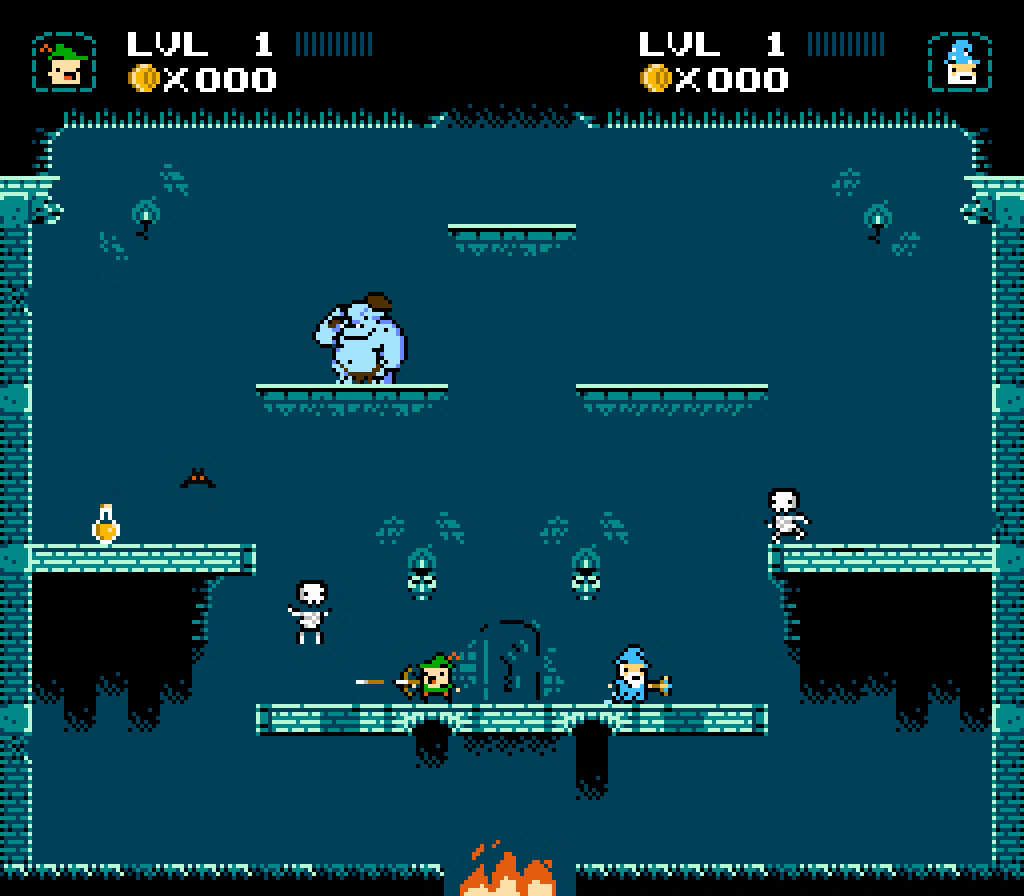
A couple of lovely videos of people playing the prototype are still on YouTube, though.
We had plenty of ideas written down for the game. But the jam only lasted a week, so we had to focus on the essentials and leave a lot for later. The trouble was, later never came. I don’t remember exactly why we abandoned it. Maybe life got in the way. Probably some flimsy excuse.
The trouble with nostalgia
A few weeks ago, a bout of nostalgia reminded me of that prototype, and I wanted to play it again. Only to discover, to my horror, that it no longer ran on my current computer.
I dug through old hard drives for the original files, hoping to get it working again. An update here, a tweak there, and before long the prototype was back from the dead.
There they were: the same little characters from twelve years ago, the same bugs, and some unfinished work on a third hero, the knight, who never made it into the released game. I couldn’t leave it like that.
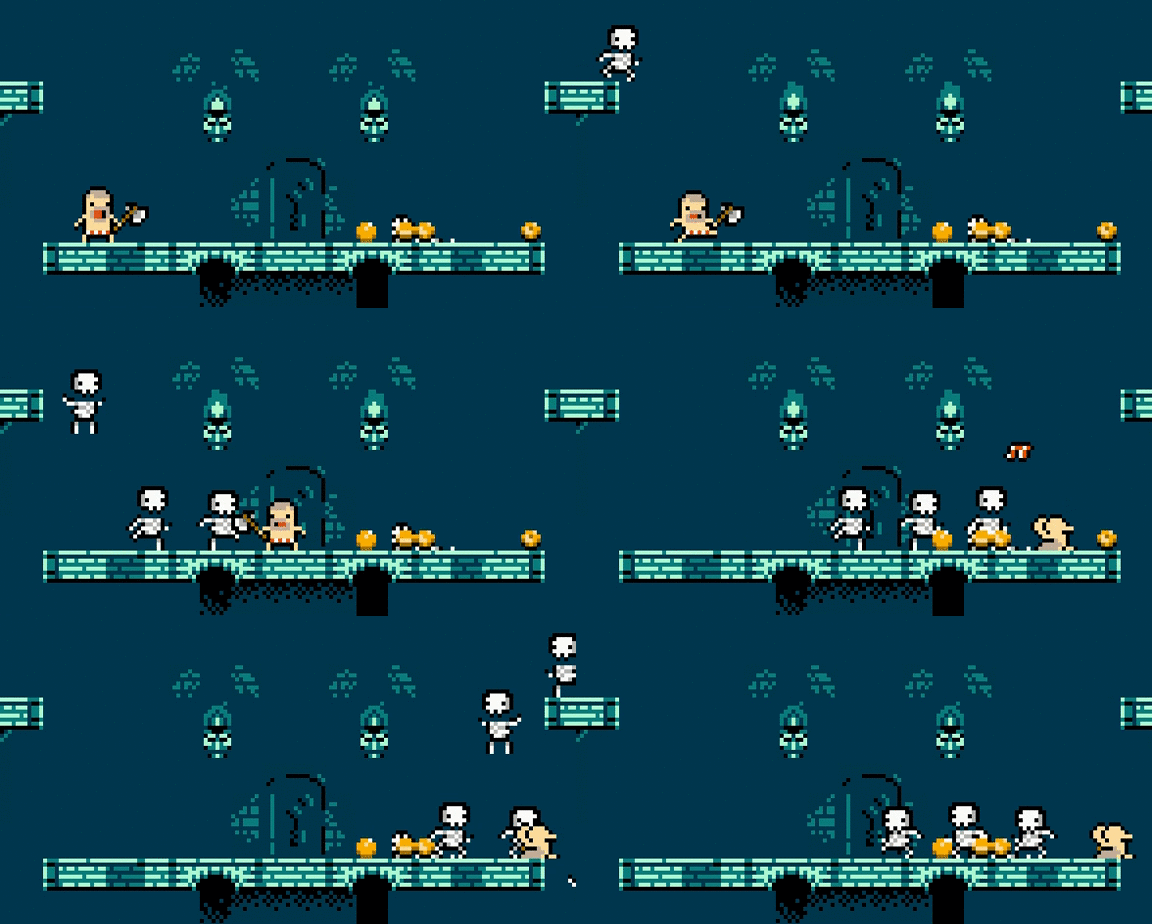
Horrors from the past
It made no sense. A retro game written in JavaScript, packaged as a web app inside what was supposedly a native desktop app. All built on outdated libraries and frameworks. And then there was the code. A deadline does not bring out my finest programming. This version wasn’t going to get much further.
Two playable characters jumping around four enclosed, single-screen dungeons, shooting four types of enemies, collecting coins and keys, and trying to survive as long as possible. That sounded manageable, so I made it again.
Something had to be done
I’ve spent the last few weeks rebuilding the prototype from scratch with more modern technology that’s a better fit for the game.
My first goal was to recreate the original as faithfully as possible, keeping its gameplay and look. This time, I had more time to build it properly and give the code a better structure, so it would be easier to maintain and expand. More on that in future posts.
I had to contact itch.io support to regain access to my old account. But version 0.3 is out now! It’s almost identical to the original from twelve years ago, with better stability, many bug fixes, and, of course, support for modern computers.
A new name
The game was originally called Super Cell Dungeon, but while rebuilding it and giving it a new lease on life, I thought, “That name makes no sense. The words are in the wrong order.” And so Super Dungeon Cell was born. Same game, rearranged words. At least it launches now.
So what’s the game?
Super Dungeon Cell is a single-screen arcade platformer you can play solo or with a friend in co-op. You’re trapped in a dungeon. Monsters drop in from above, you shoot them, they die and drop coins, and every now and then a key appears that you need to carry to a door. Repeat until you die. It won’t take long.
It’s an unashamed clone of Super Crate Box. We swapped the weapon crates for bows and staves that level up when you drink potions, gave it a medieval look, and used a colour palette that owes everything to the NES.
What comes next?
I didn’t even have to think about the next step: finish the new hero I left halfway done twelve years ago.
He’s nearly ready, and I’ll soon release version 0.4 with him in it. The QA department already has him for final testing. And by “QA department,” I mean me wearing a different hat and whichever friends I’ve managed to rope into playing for a while.